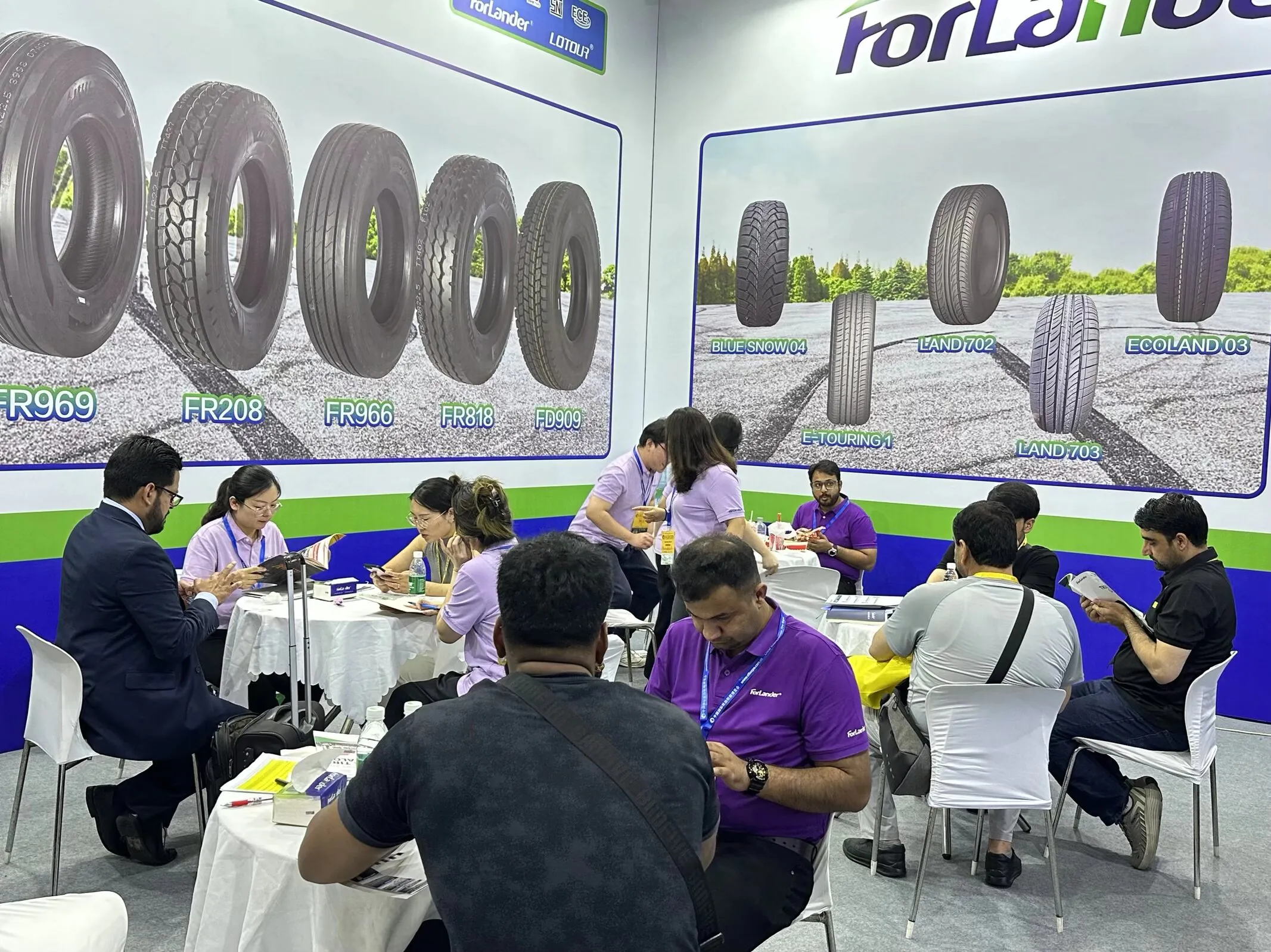
I. Introduction
Port tires are a subcategory of OTR tires. This category has high order volumes and high customer repurchase rates, but it also has a relatively high rate of quality issues, because port tires require higher reliability than standard OTR tires. A reach stacker, including its own weight and a fully loaded container, can reach a total weight of over one hundred tons. When a tire fails, the impact extends to the operating efficiency of the terminal, railway station, or yard. For overseas buyers, distributors, and industry partners, understanding the selection logic of port tires is more important than comparing prices.
This tire selection guide explains the process from three dimensions: application matching, structure type, and compound formulation, and recommends Forlander port tires for procurement reference.
II. Operating Requirements of Port Equipment Tires
The requirements for port equipment tires are reflected in their ability to withstand extreme operating conditions. Reach stacker and RTG tires must carry the combined weight of the machine and a fully loaded container, ranging from several tens of tons to over one hundred tons, and they operate on a 24-hour shift basis under high-pressure deformation. The cords and rubber inside the carcass are continuously subjected to alternating stress. Yard space is limited, equipment moves frequently, and tires generate heat through friction with the ground. The failure mode of port equipment tires is usually not sudden burst, but concentrated failure after the accumulation of chronic damage, which is the reason for their low fault tolerance.

Common failure signs to monitor:
Shoulder irregular wear
Sidewall tearing
Shoulder separation
Carcass delamination
Air leakage
Local flat spots
III. Three Key Points in Port Tire Selection
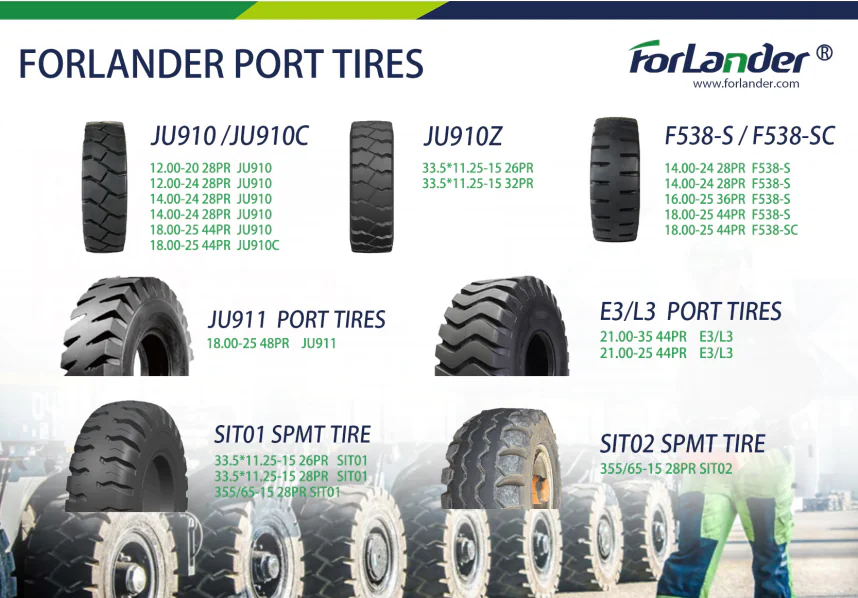
- First, the tread pattern must match the application. Port equipment includes RTG, reach stacker, forklift tire, and loader, and their working modes differ. The Forlander port tire line covers sizes from 12.00-24 to 21.00-35. Pattern selection errors lead to irregular wear and tearing.
- Second, the structure type must be confirmed. Port tires are divided into TT (tube type) and TL (tubeless). Tube type is used with an inner tube and is mainly applied to older generation port machinery. Tubeless uses an integrated airtight structure and is the mainstream configuration for new container reach stackers and rubber-tired gantry cranes. Distributors must first confirm the rim type and original configuration of the target customer’s equipment.

- Third, the compound formulation determines service life. Port tires must simultaneously meet three conditions: heavy load, low speed, and long continuous operation, which places high requirements on heat resistance and cut resistance. Some low-priced products have short service lives because the formulation standard is insufficient. Forlander has years of production experience in bias tires and has corresponding accumulation in port tire formulations.
IV. Supplier Evaluation Recommendations for Distributors
When selecting a port tire supplier, distributors are advised to verify three items:
Has the supplier supplied to ports in the target market, and is there actual usage feedback?
Can the supplier provide a complete pattern program rather than a single model?
What is the after-sales handling mechanism, including the response process for quality issues?
V. Forlander Port Tire Product Program: F538-S E4 Tyre and SIT01
1. F538-S (E4 Tyre)
The F538-S is a bias port tire with TRA code IND-4, suitable for rubber-tired gantry cranes, straddle carriers, and reach stackers. This E4 Tyre is available in 14.00-24, 16.00-25, and 18.00-25 tire sizes, with ply ratings from 36PR to 48PR, and type options of TT or TL.

Key features for buyers:
Reinforced carcass structure with penetration resistance and running stability
Strengthened bead design suitable for the frequent use of rear wheels on forklift equipment
Wider tread grooves for ground contact area and driving performance on muddy road surfaces
Design focus on load stability and torsion resistance
Recommended applications: RTG lifting, straddle carrier transport, and heavy-load lifting by reach stackers.
2. SIT01
The SIT01 is a port tire developed for modern port operations, positioned for heavy load and short-distance transport applications. The main size is 33.5×11.25-15, with a ply rating of 26PR and a single tire load capacity of 15,000 kg.
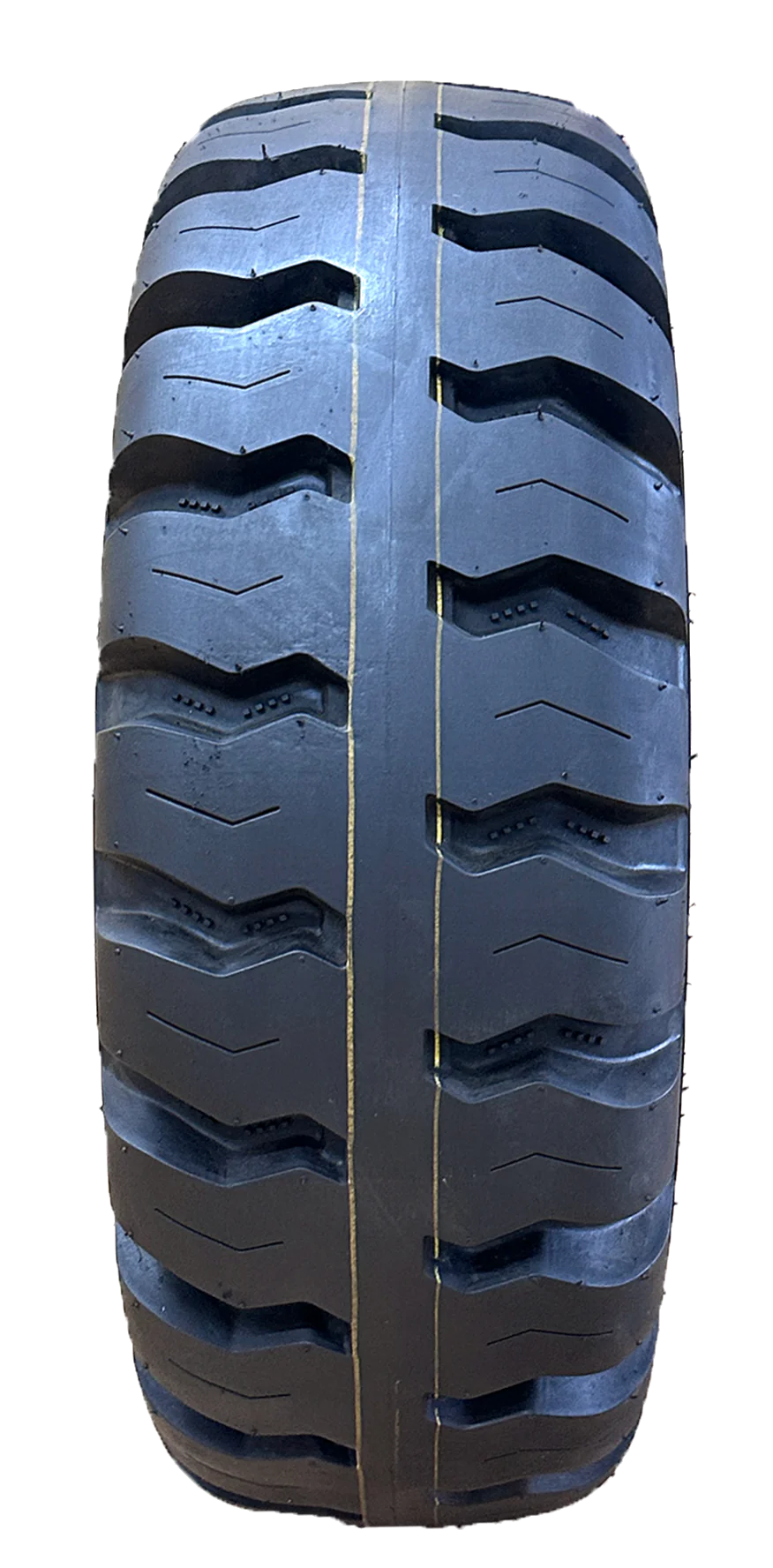
Key features for buyers:
High load capacity for heavy-load port operations
Grip performance under various ground conditions
Durable materials for extended service life
Stability required for stacking and handling operations
Application reference: This product has been applied in port equipment projects in South Korea.
Specification coverage: 12.00-20 / 12.00-24 / 14.00-24 / 16.00-25 / 18.00-25 / 21.00-25 / 21.00-35. Type: TL / TT. Certification: E-mark, DOT. FOB Qingdao, serving global distributors.
VI. Summary
Port tires have low fault tolerance, and supplier selection directly affects subsequent business costs. For overseas buyers, distributors, and industry partners, the core of evaluating a port tire supplier lies in whether it understands application matching, structure selection, and compound formulation.
Forlander has years of production experience in the port tire field, with specification coverage from 14.00-24 to 21.00-35, product programs such as the F538-S and SIT01, and complete certifications. This tire selection guide can serve as a reference for procurement decisions. If you have inquiries from port equipment customers, please contact us with specifications and application information, and we will provide a corresponding selection solution.