I. Introduction
Port operations are among the toughest environments for industrial tires. The constant cycles of heavy loads, abrasive surfaces, and continuous use necessitate specialized tire solutions. Understanding port tire classifications is essential for selecting the right product to optimize equipment performance, safety, and operational efficiency.
II. Port Tire Classification by Structure
What is Bias-Ply Tires?
Bias-ply tires, or cross-ply tires, have cords arranged diagonally across the body, typically at 30-40 degrees to the travel direction. Overlapping layers create a robust, thick carcass.

- Many ply layers for strong sidewalls
- Crisscross cord arrangement
- Durable construction for impact resistance
What is Radial Tires?
Radial tires feature cords that run perpendicularly from bead to bead. A reinforced steel belt under the tread offers exceptional stability and strength.

- Independent blocks with deep grooves
- Varied block sizes for improved pressure distribution
- Specialized sipes for enhanced grip
- Suitable for terminal tractors with frequent turns
III. Port Tire Classification by Tread Pattern
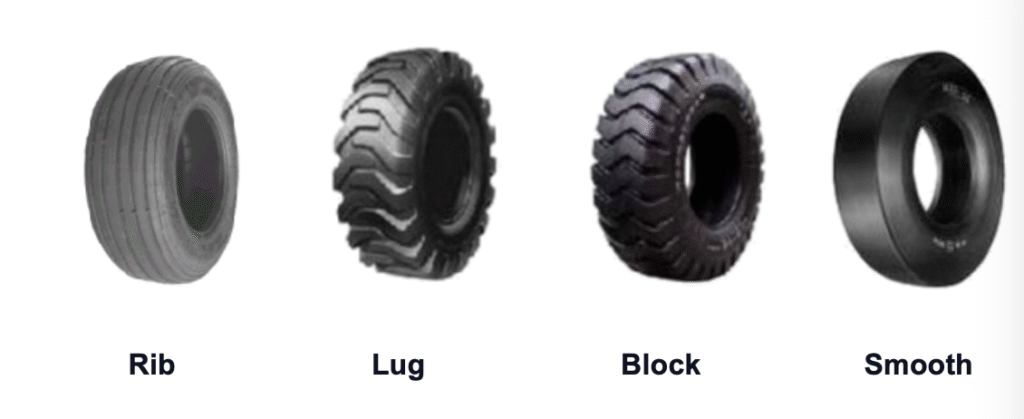
1. Block Pattern Tires
These tires have deep, independent blocks separated by wide grooves, maximizing traction and stability during heavy lifting.
Design Features:
- Independent blocks with deep grooves
- Varied block sizes for improved pressure distribution
- Specialized sipes for enhanced grip
- Suitable for terminal tractors with frequent turns
2. Smooth/Solid Tread Tires (L-5 Pattern)
With an extra-deep, smooth design, these tires maximize rubber contact for specific applications.
Design Features:
- Ultra-deep tread depth exceeding standard patterns
- Minimal groove design for maximum contact
- Specialized rubber compounds for extreme wear resistance
IV. Port Tire Classification by Tread Depth
Tread depth categorization helps users choose tires based on service life and operational conditions.
Tread Depth Design Instruction
100%

Regular Tread
E-2/E-3 L-2/L-3 G-2/G-3
.
150%
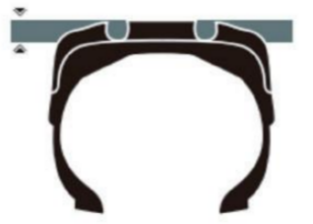
Deep Tread
E-4 L-4/L-4S G-4
250%
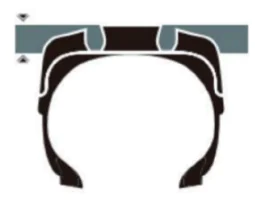
Extra Deep Tread
L-5/L-5S
- Standard Depth (20-40mm): For general port applications with moderate wear conditions
- Deep Tread (40-60mm): For heavy-duty operations requiring extended service intervals
- Extra-Deep Tread (60-80mm+): For the most demanding applications where maximum tire life is essential
- Super Deep (80mm+): Specialized applications like the KT100S pattern for extreme longevity
V. Port Equipment Tyres Classification by Application
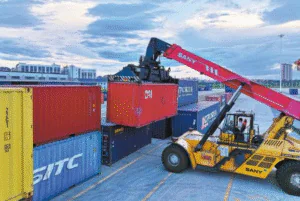
1. Container Handlers
2. Heavy Duty Forklifts
Tires must balance load capacity and maneuverability for tight spaces.

3. Reach Stackers
Require tires that support both lifting and traveling.

4. Straddle Carriers
Mobile equipment with tires for free movement in container yards, distinct from traditional gantry cranes.

5. Terminal Tractors
Primarily used for short-distance container transport, requiring durable tires for start-stop cycles.

6. Mobile Harbor Cranes
Need tires that can support heavy loads while ensuring mobility.

7. Rubber-Tired Gantry Cranes
RTG tires must support massive loads while enabling precise positioning of containers.

8. Automated Guided Vehicle (AGV) Tires
Driverless robots that autonomously transport materials, thereby increasing efficiency and reducing errors.

VI. Port Tire Classification by Rim Diameter
This classification helps users understand the size and capacity of port tires.
- Giant OTR Tires (≥33 inches): Examples: 18.00-33, 21.00-35; Applications: Heavy mining vehicles; Load Capacity: 20,000kg+.
- Large OTR Tires (25-33 inches): Examples: 18.00-25; Applications: Mainstream port equipment; Load Capacity: 8,000-20,000kg.
- Medium OTR Tires (20-24 inches): Examples: 16/70-20; Applications: Medium-duty equipment; Load Capacity: 4,000-8,000kg.
- Small Industrial Tires (<20 inches): Examples: 8.25-15; Applications: Support vehicles; Load Capacity: Up to 4,000kg.
VII. Conclusion
Selecting the right port equipment tyres involves balancing factors such as equipment needs, operating conditions, budget, and performance goals. Understanding tire classifications helps port operators make informed decisions, enhancing efficiency and reducing costs.
As a professional OTR tire manufacturer, Forlander offers a variety of port tire patterns and sizes to meet your operational needs, providing economical wear resistance that helps reduce costs and improve efficiency.
Recent trends indicate a rising preference for radial tires due to fuel efficiency and operator comfort, while bias-ply tires are still preferred for their durability. The growth of automated terminals is further driving innovations in tire technology, especially for AGVs, where precision and reliability are paramount.